
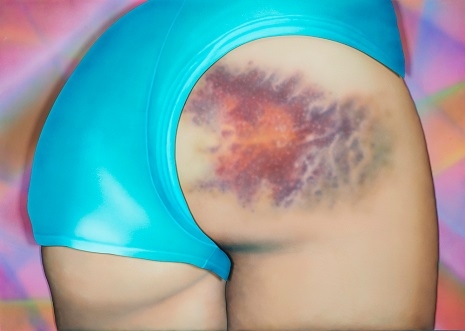
A hard fall on the ice, a tumble down the stairs, or a direct hit in a sports game—these are all common ways to get a Butt Bruise. This injury, while often the subject of jokes, can be surprisingly painful and make simple things like sitting at your desk or getting in a car feel impossible.
A bruised buttock is more than just a skin-level injury; it’s often a deep muscle bruise. Understanding what’s happening beneath the skin and how to treat it properly can help you heal faster and know when to seek medical care.
Table of Contents
What Is a Butt Bruise?
A Butt Bruise, known medically as a gluteal contusion, is an injury to the large, powerful gluteal muscles in your buttock. Like any bruise, it’s caused by a direct blow that crushes muscle fibers and breaks small blood vessels. This allows blood to leak and pool in the surrounding tissue, causing the pain, swelling, and discoloration you see.
Because the glutes are such large, deep muscles, a butt bruise can be much more painful than a simple bruise on your arm or shin.
It’s important to distinguish between a few types of injuries:
- Contusion (Bruise): This is the injury to the muscle tissue itself.
- Hematoma: A more severe hematoma on buttock is a deep pool of clotted blood that forms a lump.
- Tailbone (Coccyx) Injury: If you fell directly on your tailbone, the pain will be centered at the very base of your spine. While you can bruise both the muscle and the tailbone, a coccyx fracture is a different injury.
Common Causes of a Butt Bruise
A gluteal contusion is always caused by direct trauma. The most common causes include:
- Falls: This is the most frequent cause, especially falling backward onto a hard surface like ice, a hardwood floor, or stairs.
- Contact Sports: Direct hits, tackles, or falls in sports like football, ice hockey, soccer, and skateboarding are a major cause.
- Blunt Force Trauma: Bumping hard into the corner of a table or another piece of furniture.
- Intramuscular Injections: While not a “bruise” in the traumatic sense, a shot given in the glute can sometimes cause a small, deep bruise at the injection site.
Key Symptoms of a Bruised Buttock
Symptoms can range from mild to severe, depending on the force of the impact.
- Pain and Tenderness: This is the primary symptom. The area will be sore to the touch, and you’ll feel a deep, aching pain in buttock after fall, especially when you:
- Sit down
- Climb stairs
- Contract your glute muscles (like when standing up)
- Swelling and Inflammation: The area will likely swell and feel firm or tight.
- Discoloration: This is the classic sign of a bruise. According to MedlinePlus, the bruise will change colors as it heals, typically moving from red/purple to blue/black and finally to green/yellow.
- Stiffness: You may feel stiffness in your hip or have difficulty moving your leg.
- Lump: In cases of a hematoma, you may feel a hard, tender lump under the skin.
Diagnosis: Is It Just a Bruise?
Most minor butt bruises can be safely diagnosed and treated at home. However, if the pain is severe or you are unable to walk, a doctor will need to evaluate you.
- Physical Exam: Your doctor will ask how the injury happened and examine the area for swelling, tenderness, and range of motion.
- X-ray: An X-ray cannot see a bruise. However, your doctor will order one to rule out a fracture of the hip, pelvis, or tailbone (coccyx), especially after a significant fall.
- Ultrasound: This imaging test can be used to see how large a hematoma is and check for damage to the muscle tissue.
Treatment Options for a Butt Bruise
How to heal a butt bruise follows the same principles as treating other deep muscle contusions. The American Academy of Orthopaedic Surgeons (AAOS) recommends the R.I.C.E. protocol for the first 48 to 72 hours.
1. The R.I.C.E. Protocol
- Rest: This is critical. Avoid activities that cause pain, like running, jumping, or climbing stairs. Most importantly, try to avoid sitting directly on the bruise. Sit on the uninjured side or use a “donut” cushion or pillow.
- Ice: Apply a cold pack wrapped in a thin towel to the area for 15-20 minutes every 2-3 hours for the first 2-3 days. This constricts blood vessels, which helps reduce swelling and pain.
- Compression: Gently wrap the area with an elastic bandage (like an ACE wrap) to help reduce swelling. Be careful not to wrap it too tightly, which can cut off circulation.
- Elevation: This is difficult for a butt bruise, but lying on your stomach with a pillow under your hips can help elevate the area slightly above your heart.
2. After the First 72 Hours
- Gentle Heat: After 2-3 days, you can switch to a warm compress or heating pad. Heat increases blood flow to the area, which helps break down the old blood and promotes healing.
- Medication: Over-the-counter nonsteroidal anti-inflammatory drugs (NSAIDs) like ibuprofen (Advil, Motrin) or naproxen (Aleve) can significantly help reduce both pain and inflammation.
- Gentle Movement: Once the initial, sharp pain subsides, gentle stretching and walking can prevent the muscle from becoming too stiff. Do not “push through” any pain.
Risk Factors
You are more likely to get a severe bruise if you:
- Play contact sports.
- Are an older adult, as skin is thinner and fall risk is higher.
- Take blood-thinning medications (anticoagulants) like warfarin or apixaban.
- Have a bleeding disorder like hemophilia.
Prevention Tips
- Wear Protective Gear: In sports like football or hockey, always wear proper padding (girdles).
- Fall-Proof Your Home: For older adults, remove tripping hazards like loose rugs, ensure good lighting, and install handrails on stairs.
- Improve Balance: Exercises like Tai Chi or yoga can improve balance and reduce fall risk.
When to See a Doctor
Most butt bruises heal on their own within a week or two. However, you should see a doctor if you experience any of the following:
- Severe pain that is not helped by rest and OTC medication.
- Inability to walk or bear weight on the leg on the injured side.
- Numbness, tingling, or weakness that radiates down your leg (this could be sciatica caused by a hematoma pressing on the sciatic nerve).
- A very large, hard, and painful lump (hematoma) that is not getting smaller.
- Signs of infection: This is rare, but if you have a fever, red streaks, or pus draining from the area, seek care immediately.
- Pain centered on the tailbone: You need to be checked for a tailbone fracture.
- The bruise does not improve or fade after two weeks.
Disclaimer: This article is for informational purposes only and does not constitute medical advice. Always consult with a qualified healthcare professional for any health concerns or before making any decisions related to your health or treatment.
Published on August 22, 2023 and Last Updated on October 29, 2025 by: Priyank Pandey
Get real time update about this post category directly on your device, subscribe now.

