
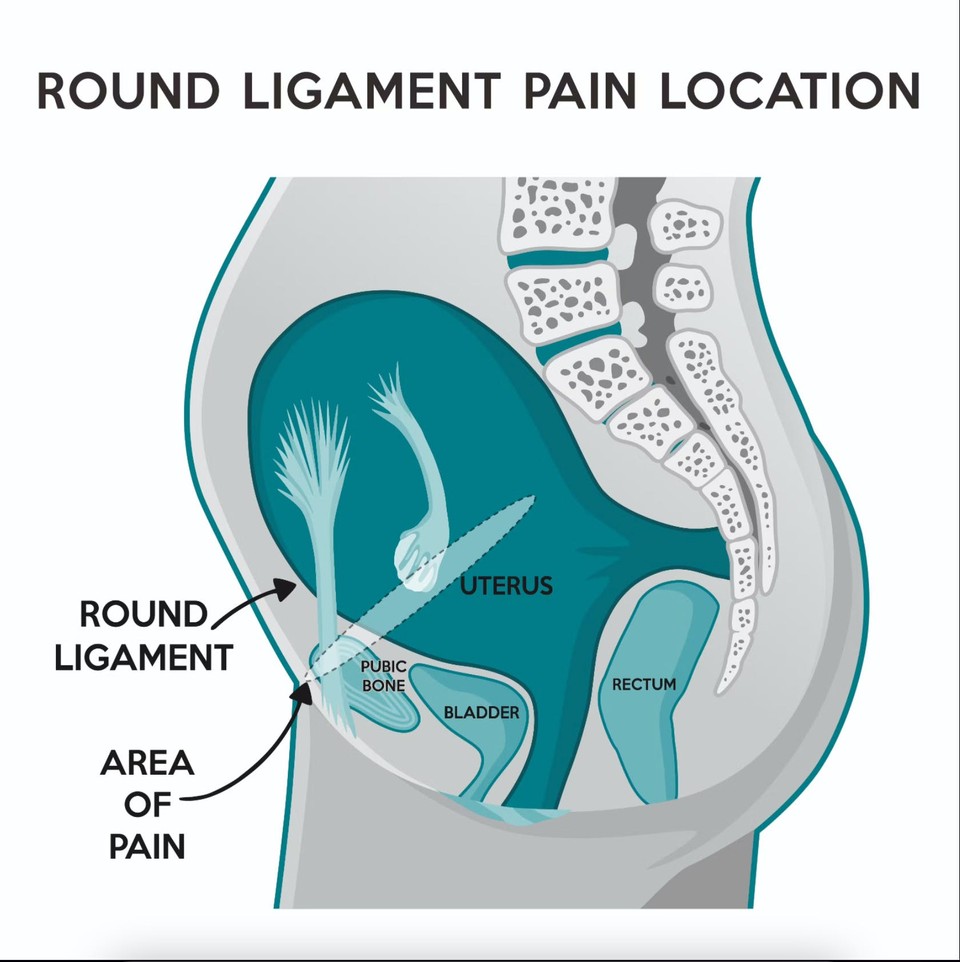
If you’re pregnant and have ever been stopped in your tracks by a sudden, sharp pain in your lower belly or groin, you are not alone. This alarming “lightning” pain can be frightening, making you worry if something is wrong. The most likely culprit is Round Ligament Pain, a very common and normal—though uncomfortable—part of pregnancy.
While it can be painful, this sensation is simply a sign that your body is adapting and making room for your growing baby. Understanding what’s happening, why it hurts, and how to manage it can provide significant peace of mind. This guide will walk you through the causes, symptoms, and safe treatment options.
Table of Contents
What Is Round Ligament Pain?
Your uterus is supported by several ligaments. The round ligaments are two rope-like bands of tissue, one on each side of your uterus, that connect the front of your uterus to your groin area.
Before pregnancy, these ligaments are short, thick, and not under much tension. As your uterus grows during pregnancy, these ligaments stretch and thin out, much like a rubber band. This stretching of the ligaments during pregnancy makes them tight and sensitive, which can cause them to spasm and hurt.
Common Causes of Round Ligament Pain
Round ligament pain is, at its core, a growing pain. It’s caused by the healthy, normal expansion of your uterus. It’s most common during the second trimester, as the uterus begins to grow more rapidly, putting more strain on these ligaments.
While the ligaments are already tight from this stretching, the pain is usually triggered by sudden movements that cause the ligaments to stretch or contract too quickly.
Common triggers include:
- Standing up too fast from a sitting or lying position
- Rolling over in bed
- Coughing
- Sneezing
- Laughing
- Sudden, jarring movements
Key Symptoms of Round Ligament Pain
The symptoms of round ligament pain are distinct and are the main way it’s identified:
- A sharp, sudden, jabbing pain in the lower abdomen or groin area.
- It can be on one side or both, though it’s often felt more intensely on the right side.
- The pain is brief, typically lasting only a few seconds at a time.
- It may be followed by a dull, aching sensation in the same area.
- The pain is “positional,” meaning it’s brought on by movement and resolves with rest.
This is different from the rhythmic, cramping pain of contractions, which will come and go with a clear pattern.
Diagnosis and How It’s Identified
There isn’t a specific test for round ligament pain. It is a “diagnosis of exclusion,” which means your doctor will diagnose it based on your symptoms and by ruling out other, more serious conditions.
Your doctor or midwife will likely:
- Ask you to describe the pain (what it feels like, when it happens, how long it lasts).
- Perform a physical exam, gently feeling your abdomen to check for tenderness.
- Ensure you have no other warning signs, such as fever, bleeding, or contractions.
This process is to make sure your sharp pain during pregnancy isn’t a sign of something like preterm labor, an ovarian cyst, or appendicitis.
Treatment Options for Round Ligament Pain
Because round ligament pain is a mechanical issue, treatment focuses on managing the symptoms and preventing the sudden spasms.
Immediate Relief
When you feel that sharp pain, you can:
- Stop and rest.
- Change positions. If you are standing, sit down.
- Flex your hips. Bend at the hips and bring your knees toward your chest. This helps “slacken” the ligaments and can provide instant relief.
Home Remedies and Prevention
Here are safe ways for how to relieve round ligament pain and reduce how often it happens:
- Move Slowly: Be mindful of your movements. Try not to jump up suddenly from the couch or out of bed. Roll onto your side to sit up.
- Brace Yourself: Before you cough, sneeze, or laugh, try to bend at your hips. This “braces” the ligaments so they don’t get pulled so suddenly.
- Use a Maternity Support Belt: A “belly band” can help support the weight of your growing uterus, taking some of the strain off the ligaments.
- Apply Gentle Heat: A warm (not hot) bath or a warm compress on the sore area can help relax the ligaments.
- Try Prenatal Stretches: Gentle stretches, like pelvic tilts or cat-cow stretches, can help. Talk to your doctor or a prenatal yoga instructor about safe exercises.
- Pain Relievers: If the pain is very bothersome, you can ask your doctor about pain relief. According to the American College of Obstetricians and Gynecologists (ACOG), acetaminophen (Tylenol) is generally considered safe during pregnancy when used as directed. Always talk to your doctor before taking any medication.
Risk Factors
The primary “risk factor” is simply being pregnant. However, you may be more likely to experience it if you:
- Are in your second trimester
- Are pregnant with multiples (twins or more)
- Are very active or get up and down frequently
- Have a history of this pain in a previous pregnancy
When to See a Doctor
Round ligament pain is not dangerous for you or your baby. However, you should not ignore severe pain during pregnancy.
Call your doctor or midwife immediately if your pain is:
- Severe, constant, or rhythmic: Pain that lasts for minutes or hours, or comes in waves like contractions.
- Accompanied by bleeding or spotting.
- Accompanied by fever, chills, nausea, or vomiting.
- Associated with burning or pain during urination.
- Joined by a gush or leak of vaginal fluid.
- Accompanied by back pain, especially low, dull back pain you haven’t felt before.
- If you feel a decrease in your baby’s movement.
When in doubt, always make the call. Your healthcare team is there to ensure both you and your baby are safe and healthy.
Disclaimer: This article is for informational purposes only and does not constitute medical advice. Always consult with a qualified healthcare professional for any health concerns or before making any decisions related to your health or treatment.
Published on October 3, 2023 and Last Updated on October 29, 2025 by: Priyank Pandey

