
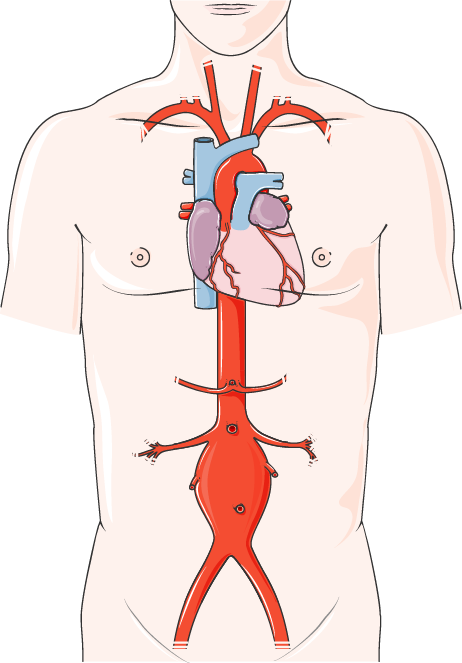
An Abdominal Aortic Aneurysm, often called “AAA” or “triple-A,” is a serious health condition that is frequently called a “silent killer.” This is because it can grow slowly for years without causing any noticeable symptoms, yet it involves the body’s largest and most important artery.
Understanding this condition is crucial, not because it’s common, but because it’s highly treatable when caught early. This guide will cover the causes, the all-important abdominal aortic aneurysm risk factors, and the screening and treatment options that save lives.
Table of Contents
What Is an Abdominal Aortic Aneurysm?
To understand an AAA, let’s break down the name:
- Abdominal: Refers to your belly (abdomen).
- Aortic: Refers to the aorta, which is the largest artery in your body. It runs from your heart, down through your chest, and into your abdomen, where it supplies blood to your legs and other organs.
- Aneurysm: This is a bulge or swelling in a weak part of an artery wall. Think of it like a weak spot on a tire that begins to bulge out.
So, an Abdominal Aortic Aneurysm is a dangerous bulge in the part of your aorta that passes through your belly. The main danger is that this bulge can weaken, grow, and eventually burst or “rupture.” A ruptured aneurysm is a life-threatening medical emergency.
Common Causes and Risk Factors for an AAA
An AAA occurs when the wall of the aorta weakens and balloons outward. While the exact cause isn’t always clear, the weakening is most often linked to a few key causes and powerful risk factors.
Primary Causes
- Atherosclerosis (Hardening of the Arteries): This is the most common cause. Plaque (a fatty, waxy substance) builds up on the artery walls, making them stiff and weak.
- High Blood Pressure (Hypertension): The constant, high force of blood pushing against the artery wall can cause it to weaken and expand over time.
- Blood Vessel Inflammation (Vasculitis): In rare cases, inflammation in the artery itself can lead to weakening and an aneurysm.
- Heredity: Some individuals may inherit a tendency to develop aneurysms.
Key Risk Factors You Need to Know
According to the Centers for Disease Control and Prevention (CDC), some people are at much higher risk. This is the most important section to review:
- Smoking: This is the single most important risk factor. Smokers are many times more likely to develop an AAA than non-smokers. Chemicals in tobacco smoke damage the lining of the aorta, weakening its walls.
- Age: The risk increases significantly after age 60.
- Sex: Men are far more likely to develop an AAA than women.
- Family History: Having a first-degree relative (like a parent or sibling) with an AAA increases your own risk substantially.
- Other Aneurysms: Having an aneurysm in another artery (like the one behind your knee) puts you at higher risk for an AAA.
- High Blood Pressure & High Cholesterol: Both contribute to the artery damage (atherosclerosis) that leads to aneurysms.
Key Symptoms of an Abdominal Aortic Aneurysm
This is the most critical part to understand: Most abdominal aortic aneurysms produce no symptoms. They are often discovered by chance during a medical exam or imaging test done for an unrelated reason (like a back-pain X-ray).
However, as an aneurysm grows, or if it begins to leak, it may cause:
- A deep, persistent pain in your abdomen or on the side of your belly
- Pain that radiates to your lower back
- A throbbing or pulsing feeling near your navel (like a heartbeat in your stomach)
🚨 Symptoms of a Ruptured Aneurysm (Medical Emergency)
A ruptured AAA is a life-threatening event that requires immediate medical help. The symptoms are sudden and severe. Call 911 or your local emergency services immediately if you or someone else experiences:
- Sudden, intense, and constant pain in the abdomen or back (often described as a “tearing” sensation)
- Pain that radiates to the groin, buttocks, or legs
- Sudden weakness, dizziness, or fainting
- Clammy, sweaty skin
- A rapid heart rate (tachycardia)
- Nausea and vomiting
Diagnosis and Screening
Because AAA symptoms are so rare, screening is the most effective way to detect one.
The Importance of AAA Screening
The U.S. Preventive Services Task Force (USPSTF) strongly recommends a one-time screening for Abdominal Aortic Aneurysm in:
- Men aged 65 to 75 who have ever smoked.
Your doctor may also recommend screening if you are a man aged 65-75 who has never smoked but have a strong family history.
How is an AAA Diagnosed?
- Abdominal Ultrasound: This is the standard screening test. It is completely painless, non-invasive, and uses sound waves to create a picture of your aorta. It can accurately measure the size of the aorta and detect a bulge.
- CT Scan: If an aneurysm is found, a CT scan can provide a more detailed, 3D image to help a surgeon plan for treatment.
- MRI (Magnetic Resonance Imaging): Another imaging test that can provide clear pictures of the aorta.
Treatment Options for Abdominal Aortic Aneurysm
Treatment depends entirely on the size of the aneurysm, how fast it’s growing, and your overall health.
1. Monitoring (“Watchful Waiting”)
If the aneurysm is small (typically less than 5.5 cm, or about 2 inches) and not growing quickly, the risk of rupture is low. Your doctor’s first-line approach will be to monitor it.
- Regular Scans: You will likely get an ultrasound or CT scan every 6 to 12 months to check its size.
- Managing Risk Factors: This is crucial. Your doctor will insist on:
- Quitting smoking immediately.
- Controlling high blood pressure with medication.
- Managing cholesterol with diet and/or statins.
2. Surgical Repair
If the aneurysm is large, growing quickly, or causing symptoms, your doctor will recommend surgery to prevent a rupture. There are two main types:
- Open Abdominal Surgery: This is the traditional method. A surgeon makes an incision in the abdomen, removes the weakened section of the aorta, and replaces it with a synthetic tube called a graft. This is a major surgery with a longer recovery time.
- Endovascular Aneurysm Repair (EVAR): This is a less invasive procedure. A surgeon inserts a catheter through a small incision in your groin and guides a stent-graft (a fabric tube supported by a metal mesh) to the site of the aneurysm. The graft then opens up, creating a new, stable pathway for blood to flow, while the old aneurysm sac is left to shrink over time.
Prevention Tips
While you can’t change your genes, age, or sex, you can control the most important risk factors.
- Do not smoke. If you do, quitting is the single best thing you can do for your aorta. Talk to your doctor about smoking cessation programs.
- Control your blood pressure. Follow your doctor’s advice, take medications as prescribed, and reduce salt in your diet.
- Eat a heart-healthy diet. Focus on fruits, vegetables, whole grains, and lean proteins.
- Maintain a healthy weight and get regular exercise.
When to See a Doctor
- For Screening: If you are in a high-risk group (especially if you are a man over 65 who has ever smoked), ask your doctor about getting a one-time AAA screening. It’s a simple test that could save your life.
- For Symptoms: If you develop new, persistent abdominal or back pain, or feel a pulsing in your belly, make an appointment with your doctor.
- FOR AN EMERGENCY: If you experience any signs of a rupture (sudden, severe pain, dizziness, rapid pulse), do not wait. Call 911 or your local emergency services immediately.
Disclaimer: This article is for informational purposes only and does not constitute medical advice. Always consult with a qualified healthcare professional for any health concerns or before making any decisions related to your health or treatment.
Published on December 20, 2024 and Last Updated on October 29, 2025 by: Priyank Pandey
Get real time update about this post category directly on your device, subscribe now.

